“Toto, we’re not at the beach anymore”

Blue Bear needs a directionI followed the signs toward Myrtle Beach but somewhere around Charleston have to take a left turn.

As I leave the ocean and  beach behind, I will miss the smell of the salt air, the cry of the sea birds, and most of all the beauty of the sunrise accompanied by the music of the waves, whether soothing or stormy.

The interior of our country is filled with beautiful, majestic, serene, and exciting places and I enjoy all the variety, yet being at the ocean shore at sunrise is pretty hard to beat (though the shores of  the Great Lakes come close.)

The salt marshes of Georgia, the antebellum vibe of Charleston, the Blue Ridge Parkway and Smokey Mountain National Park await. Adventure on.


Jumpin’ Jellies

Stormy here today.

When storms churn the surf, the beach is often nearly devoid of creatures of the human variety. Yet there is always wildlife aplenty — the usual assortment of shorebirds skittering along, pelicans swooping low over the waves, and the heron patiently plying the surf for a meal. The sand is dotted with holes, large and small, harboring clams and crabs. And after a big storm jellies (aka jelly fish – which they are not – fish that is) get washed ashore and litter the sand like transparent deflated balloons.

After a recent storm, Portuguese Man-o-War lay on the beach like clear snack bags filled with deep blue liquid. The Portuguese Man-o-War looks like a jelly, but according to National Geographic they are actually a colony of organisms that float on the currents and deliver a powerful sting that can paralyze and kill small fish.

img_7642-qprWatch out for their tentacles; even when lying dead on the beach they can still deliver a painful sting to the unwary beach walker. And sometimes, they may still be alive hoping to catch an errant wave back out to sea.

Crabby

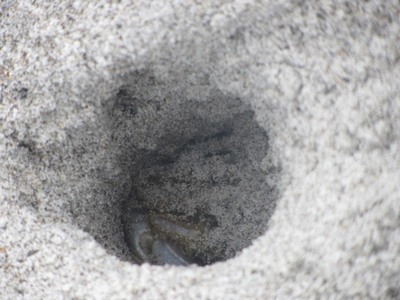
Crab at Cocoa Beach, FloridaWhen you enter the beach there is often evidence of a colony of crabs under the sand. Usually all you see is their holes, large and small. I managed to catch this one just as it scrambled back inside to hide.

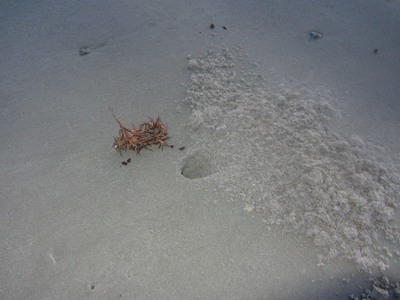
The next morning there was the shell of a sea urchin outside its door. Do you think it is in its hole saying, “I can’t believe I ate the whole thing?”

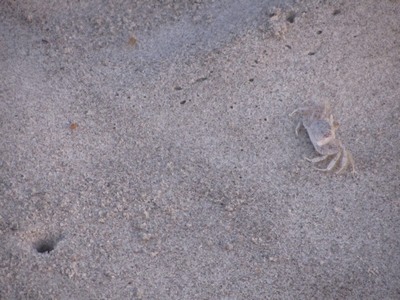
Sea urchin lunch outside crab hole, Cocoa Beach, FloridaHere is what they look like topside.

Ghost crab, Cocoa Beach, Florida

Canaveral National Seashore

As I mentioned in the last post, acres and acres of the land around  NASA’s Kennedy Space Center not needed for space agency business is preserved partly as a wildlife preserve (Merritt Island) and partly as a wild, natural seashore (Canaveral National Seashore.)

I spent most of a day, walking trails, visiting historical locations, and getting coated in the salt spray from storm tossed waves. I even got rained on but it was well worth it. Another national treasure just waiting to be explored.

Here are a few images for you to enjoy. More on the historical locations another time.

If you are near Florida’s Space Coast, be sure to take some time to take a walk on the wild side.

By the way, all this was happening while they launched a SpaceX rocket from the Kennedy Space Center.

Merritt Island National Wildlife Refuge

Blue Bear at Merritt Island National Wildlife RefugeAnyone who knows me knows that getting out into the wide open spaces to view the beauty of an unspoiled landscape and the creatures that call it home is a passion.

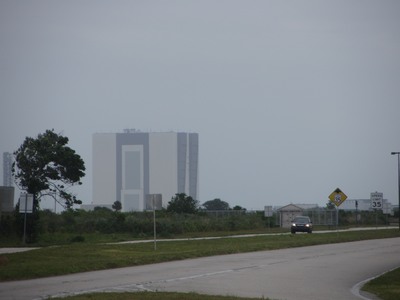
NASA Vehicle Assembly Building, FloridaAfter leaving Cocoa Beach, where my only real escape from the chaos of that over-developed tourist community was the beach in the early morning, I headed to Merritt Island National Wildlife Refuge and Canaveral National Seashore. This large expanse of Florida estuary, salt marsh, mud flats, and hammocks, literally in the shadow of the NASA vehicle assembly building at the Kennedy Space Center, provide breeding grounds and refuge for many threatened and endangered species.

I would love to hike, bike, or kayak in this area but since it was mid-afternoon before I got there I had to be content with what I could see quickly, mostly from my car. The National Park Service accommodates this need (and provides those who cannot or do not want to get out of the car) with the Black Point Wildlife Drive — a 7-mile drive that winds through spectacularly unspoiled Florida scenery. Take a video tour here.

Here are a few creatures I met along the way.

Next scenes from Canaveral National Seashore.

Pretty as a Peacock

I went out with some friends one day not long ago and was told we were going to the “peacock neighborhood.” Neighborhoods in Florida, as in most places these days, seem to all have themes — palms, seashells, etc.

So I was totally unprepared for this —

Apparently, this neighborhood in Cape Canaveral used to be the home of a wildlife sanctuary. When the sanctuary closed some of the peafowl refused to leave. Love them or hate them (because of their raucous cry and other birdbrain habits) — you have to admit they sure are pretty.