Some days are diamonds, some days are stones

John Denver sang those words. He was not talking about sunrises but it is a good adage anyway.

Each day awakens differently, some to sparkling brightness that illicit “oooohs” and “ahhs” as if watching fireworks. Others are more sedate in nature — cloudless days that offer a simple glow that grows from dark to light. This was one of those days.

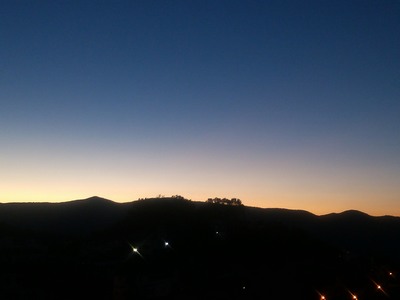
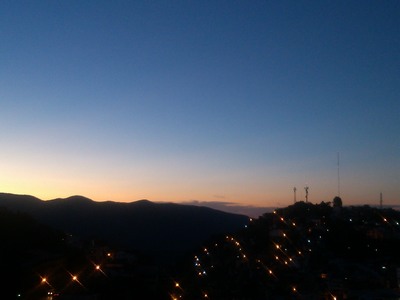
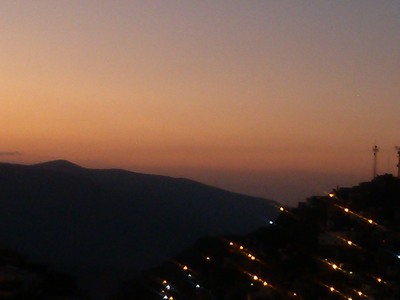
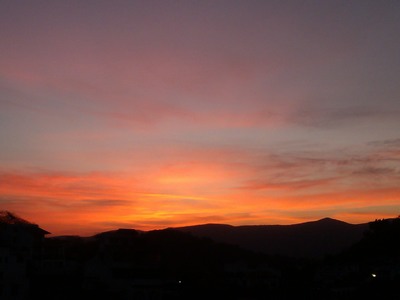
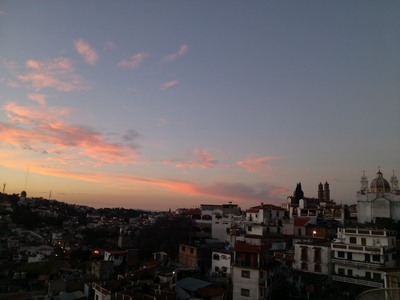
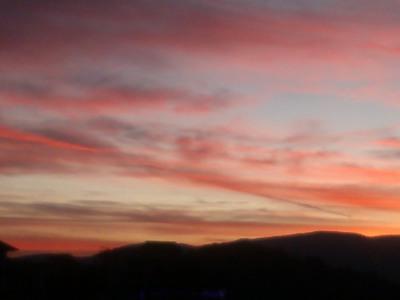
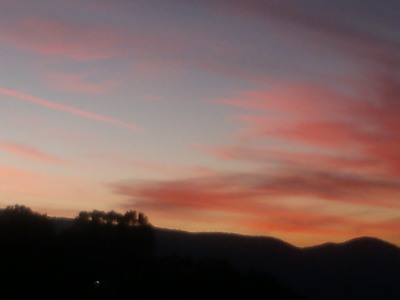
Sunrise, Taxco de Alarcon, Mexico Sunrise, Taxco de Alarcon, MexicoSunrise, Taxco de Alarcon, MexicoSunrise, Taxco de Alarcon, Mexico


Whether spectacularly colorful or a simple glow, each day’s beginning is still beautiful.

Sunrise: Taxco Style

I have been asked for sunrise pictures EVERY DAY! I am not sure I can grant that request but will give it my best shot! (OK you language junkies, noodle on that one — shoot who?)

Sunrise, Taxo de Alarcon, Mexico

I just love how the sky changes with each passing minute, growing in intensity before brightening. I am so thankful to have such a glorious way to start each day.

Watch this to see the whole show.

This slideshow requires JavaScript.

Curiouser and Curiouser

Isn’t that how Alice described the situation after falling down the rabbit hole?

The other night, it appeared that the sun was setting in the east, and this morning the sunrise was most visible over “el Centro” (downtown) to the west.

Have I somehow fallen down my own rabbit hole and awakened on another planet?

Sure is a pretty site though.

Sunrise, Taxco de Alarcon, Mexico

Sunrise — Sunset

I saw my first sunset in Taxco today. Since the sun drops behind the mountains long before it sets, seeing any color at night is most unusual.

But wait, the sunset (r) was in the exact same place as the sunrise (l) this morning!

“How is that?” I asked my friend. And she responded with “January is crazy; February more” which may explain the ups and downs of the weather but not why the sun is setting in the east.

Having no logical explanation of this phenomenon, I will merely share the photos of this morning’s sunrise with you. Enjoy!

This slideshow requires JavaScript.


Mexican Traditions – Three Kings Day

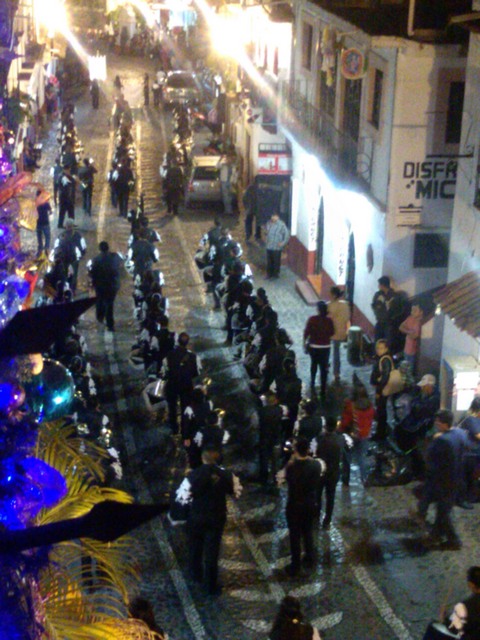
Band in the street, Festival of OUr Lady Guadalupe, Taxco, Mexico


The holiday season in Mexico just goes on and on. First there is the The Feast of Our Lady Guadalupe which begins on December 1st and culminates on December 12th with marching bands playing repetitive music, feverish dancing, and of course fireworks.

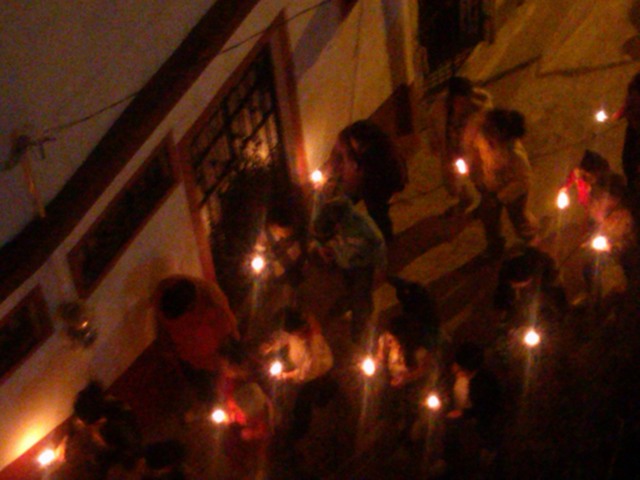
Las Posadas procession, Taxco, Mexico


Then on the 16th, Las Posadas start and the calles (streets) and barrios (neighborhoods) are filled with the sound of children singing and pinatas breaking, along with candlelit processions, and more fireworks.


Families gather for Christmas Eve and Christmas but unlike back home, these are only days for family to be together; no gifts under the tree to open — well maybe a small gift or two.

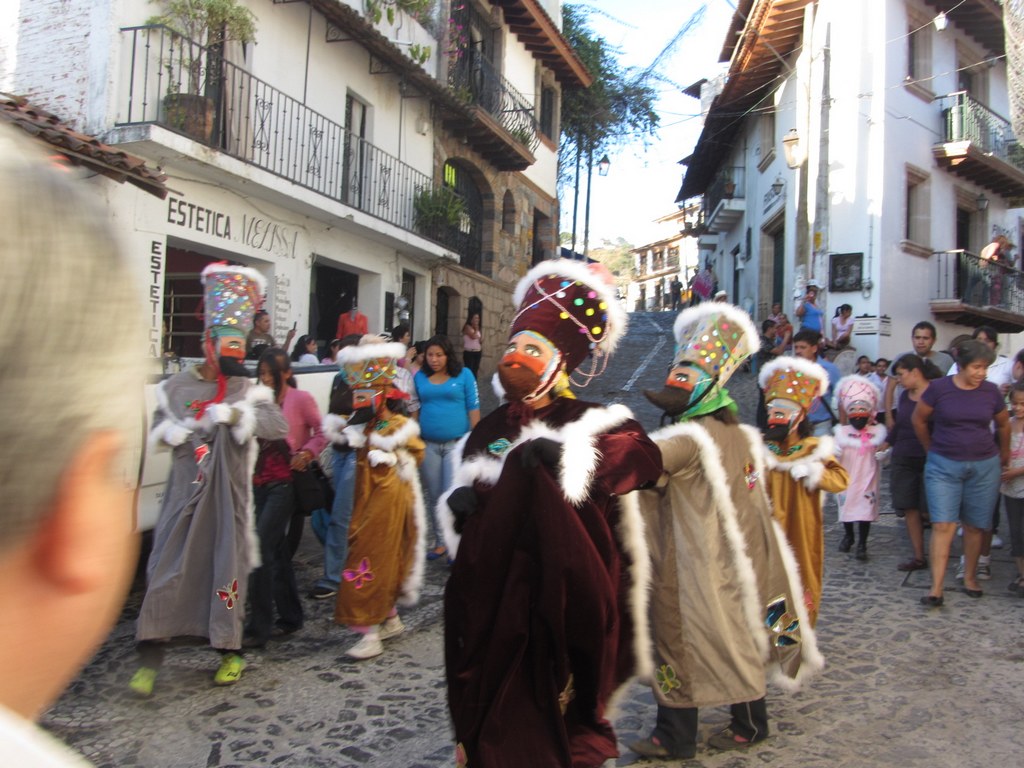
Tonight is the night that Mexican children most look forward to. They set out their shoes in eager anticipation of finding them filled with gifts in the morning. Three Kings Day, January 6th, marks twelve days after Christmas Day, when supposedly the three kings appeared before the baby Jesus and presented him with the gifts of gold, frankincense, and myrrh.

At midnight, the sky will be punctuated with the sight and sound of fireworks and airworks (fireworks with only the boom), church bells will peal, and if they do not sleep though all that noise, children will open their gifts. The day will be marked with yet another family gathering where Rosca de Reyes (Wreath of Kings) bread will be eaten and whomever finds the baby Jesus in their piece gets to host the final holiday celebration, Dia de Candelaria, on February 2.

(To learn more about these Mexican traditions, follow the links above.)

Three Kings Day, Taxco, MexicoNo doubt there will also be another parade down my street. Can’t wait!


Mexican Traditions — Festival of Our Lady of Guadalupe

Today is the Festival of Our Lady of Guadalupe, probably the biggest religious festival in all of Mexico. Hundreds of thousands travel to the Basilica of Guadalupe in Mexico City where supposedly the virgin Mary appeared to a simple peasant, named Juan Diego, on December 9 and December 12, 1531.

As the legend goes, Mary told Juan to ask the bishop to build a church on Tepeyac Hill but the bishop needed proof of Juan’s encounter and asked for a miracle. Juan returned to the hill to find roses where previously only cacti had grown. Juan Diego showed the roses to the archbishop and revealed an image of the Lady of Guadalupe she emblazoned on his cloak (this cloak is on display at the Basilica), convincing the bishop of the miracle so the church was built. An little detail I find interesting is that Mary supposedly spoke in the indigenous Nauatl language, causing many indigenous people to convert to Catholicism.

The festival actually starts on December 1st when ardent believers begin their pilgrimage, often by foot, bicycle, burro, or as I saw today, horseback to Mexico City or any town (like Taxco)with a church in honor of Guadalupe. Some show their devotion by arriving to the church on their knees. Children often wear authentic costumes, while adults wear clothing imprinted with images of the virgin and carry candles and icons. Cars and trucks are decorated with images, three-dimensional icons, or mini altars honoring Guadalupe, the patron saint of Mexico. Click here for pictures.

The main celebration, as I noted in yesterday’s post, begins the night before the feast day (December 12) with bands marching solemnly through town playing pretty much the same song (maybe two)over and over. Gathering a crowd as they march, the processions eventually lead to the Church of Guadalupe far up the mountain beneath the Cristo statue. There the music continues with fireworks and airworks (fireworks with only the boom)adding to the cacophony. Often, conchero dancers (the name probably comes from the word concha, meaning “shell,” suggested by their mandolin-shaped instruments made of armadillo shells) often in colorful traditional dress (blending indigenous traditions with the Catholic celebration), offer their art to the virgin by furiously dancing to the endlessly repeated accompaniment. The celebration continues into the wee hours of the morning, with a midnight mass, church bells pealing and more fireworks and booms, ending about 1 am.

The following day, December 12, the festival continues from morning to night with more music, dancing, feasting, and of course, fireworks.

I wandered downtown to, as a Mexican friend puts it, “see the show,” but other than a good sized band of cabello hombres (men on horses) carrying their Guadalupe pennant and saying something over a loud speaker (which I could not understand) I did not see anything unusual. It just seemed a little like the day after Thanksgiving back home, with lots of people wandering around and shopping. Of course I did not go to the top of the mountain where the church is located either.

Now that the sun is going down, the bands and fireworks are becoming more prominent again.