Telefono

I have been here several weeks now without the ability to call my friends and family back home. You thought Verizon was bad???? Try dealing with a phone company that has no real competition!!! (Well perhaps that is the same). And customer service people who each tell you something different and either put you on hold forever until you hang up or outright hang up on you if they don’t want to answer or do not know the answer to your question.

My first two years coming to Mexico, I just used my Verizon phone with a Mexican-American plan; that gave me the ability to call home and to text local friends. However, in the push to get everyone off of their unlimited data plans and start charging by the usage, as of last year,Verizon no longer offers that plan. Well, actually you can get it but for no more than a 2 week vacation, not for longer term visits like mine.

So what to do? How to stay in touch when calling home is roaming at 99 cents a minute? Ouch!

cellphoneSolution: A Mexican smartphone.
For about $200, I was able to get a full feature Samsung smartphone (yep, just like the $600 ones back home) which allows me to text everyone here (their preferred, aka cheapest, mode of communication) and call home for the whopping sum of 1 or maybe 2 cents a minute. And if I have wi-fi and the right app, calling home is FREE!

The only trouble is that Mexico operates on a prepay system and for some reason if you do not use your phone for a period of time, they lock the phone and eventually reclaim your number and your credit. Such a deal!!!! ($100 pesos may not be much for me to lose but to someone living in Mexico, that is a lot of money.)

We knew of this usage requirement, of course, so to keep it active, my phone was used for visitors. And, when Vanessa’s family visited, they used it to keep in touch. Vanessa dutifully swapped out the chips (hers and mine) every few months (as required) and used my phone but apparently, somewhere along the line, the phone company changed the rules (again) shortening the time limit for not using the phone and unknowingly my phone number was locked and lost.

After at least 5 long phone calls to the company and several in person visits, I can reclaim my really cool number (111-8855) for a fee, or oh wait I cannot. Like most everything in Mexico, one is at the whim of the powers to be.

As it turned out, I had to start all over with a new number and trying to figure out how to keep it alive when I go home. I’d ask for suggestions but since the rules change constantly, who really knows?!!! I will just put credit on it every month and hope.

With my new Mexican phone in hand and my Internet calling app installed and tested (don’t try this on your Verizon phone unless you want to be rudely surprised with a REALLY big bill, as I was last year), I am ready to make phone calls. Family and friends I will be in touch soon.

And my Verizon phone? Well, it takes very nice pictures. And with the two phones together, I do not have to keep switching between different translation apps; I just consult a different one on each phone  — having the best of both instantly available.

Oh the challenges of international living! But it sure beats smoke signals.
Excuse me, there is a banana in my soup!

When you enter another culture, there are bound to be differences in customs, ways of doing things, clothing, and, of course, food.

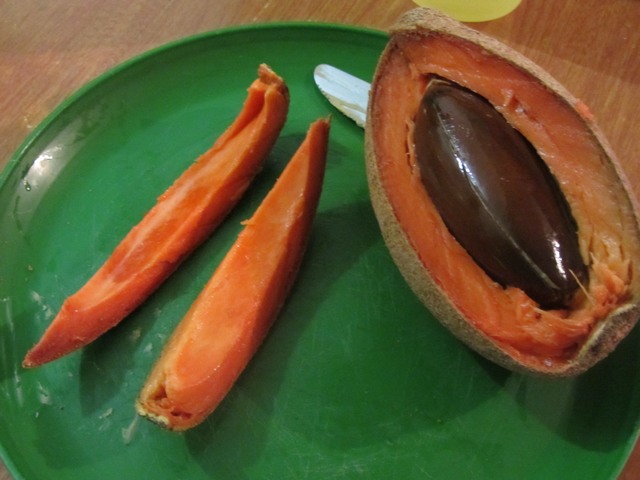
img_0419-qprIn Mexico, once you get used to “chili” (aka hot peppers) and salsa in or on everything and drinks that come in bags, there are unusual foods, such as:

Mamee


Mamey – A large orange fruit resembling a small oval cantalope with orange fruit that tastes a little like sweet potato.

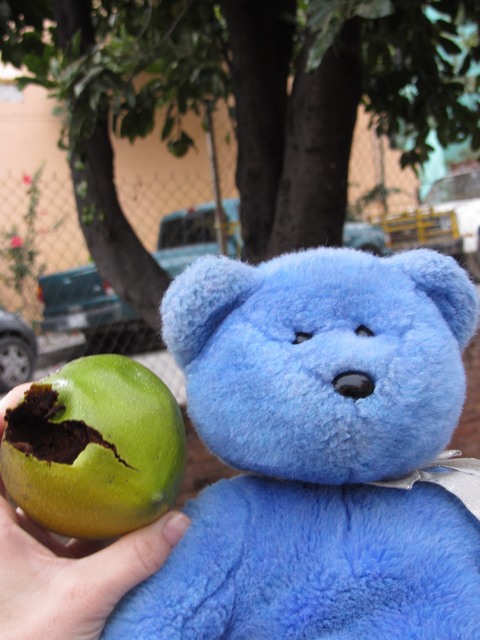
ZapoteSapote – White – a strange slimy, somewhat acidic fruit (which I do not care for) and black – which I dubbed the chocolate pudding fruit because, when ripe, the flesh is deep brown, almost black, with the consistency of pudding and a somewhat chocolatey taste.

Nopale


Nopales – Cactus, served a variety of ways cooked and raw.

Jicama


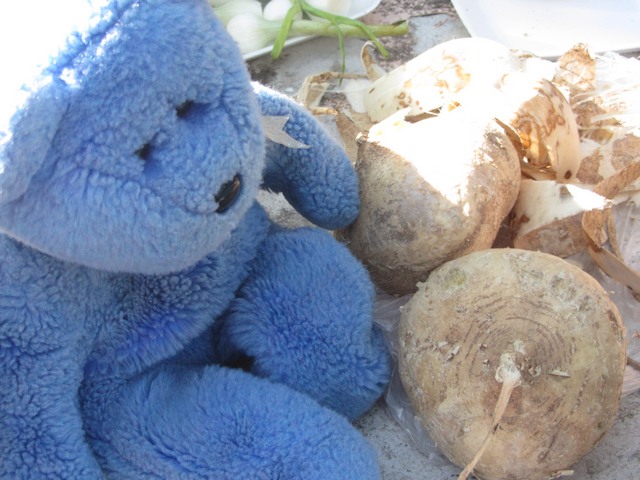
Jicama – A starchy tuber, like a potato but sweeter and juicier. Imagine a potato crossed with an apple. Eaten raw, often with chili.

Plantains


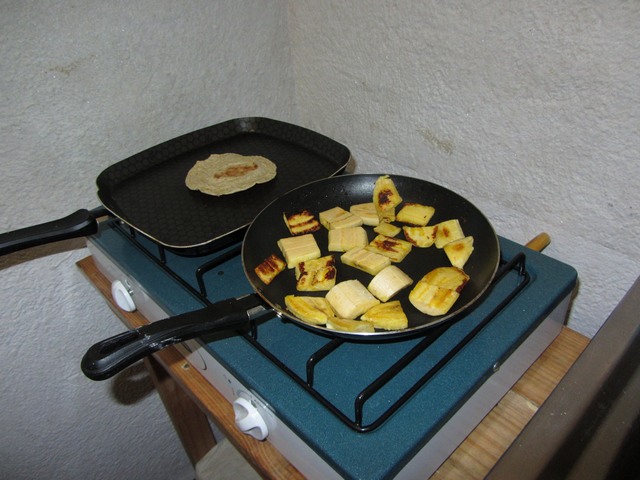
Plantains – Like a  banana only starchier. You may be accustomed to them, as I am, fried.

sopa/soup


Imagine my surprise when I took a bite of my lentil soup and what appeared to be potato turned out to be a plantain.

Variety is the spice of life right?!!!

Mexican Traditions — Las Posadas

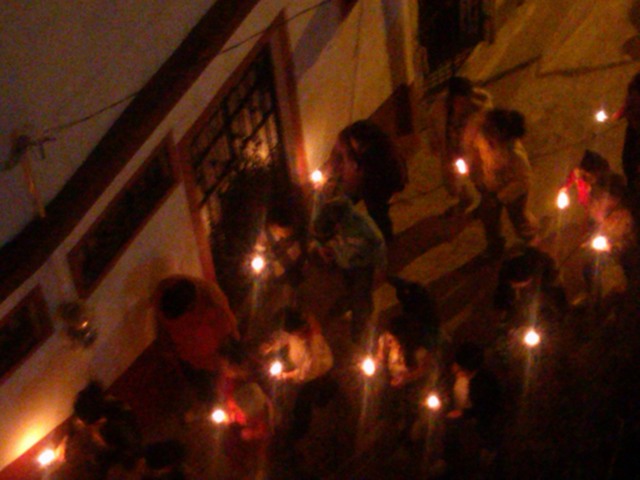
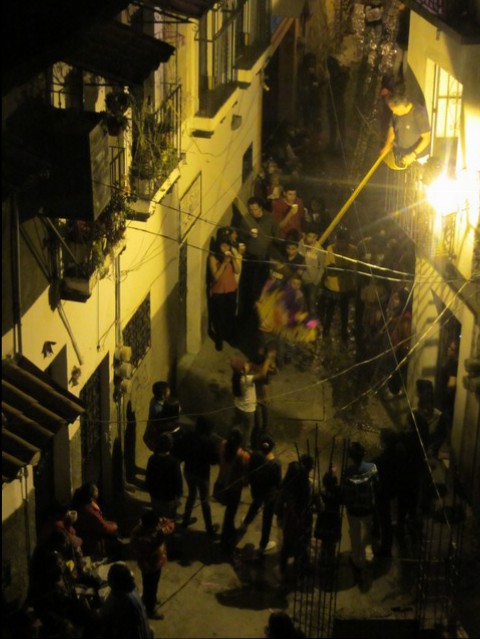
With a few days rest after the 12 day observance of the Festival of Our Lady of Guadalupe, culminating December 12th, December 16th marks the beginning of Las Posadas. For 9 nights, the barrios (neighborhoods) and callejons (small streets) around my house are filled with children singing and shouting, pinatas breaking, and of course, fireworks.

With roots in Catholicism, possibly started by Spanish friars who combined the December Aztec celebration of the birth of Huitzilopochtli (seen as the sun) into the celebration of Christmas, December 16, marks the start of 9 days (possibly representing the 9 months of the virgin Mary’s pregnancy) of nightly visits to the homes of friends and neighbors.

Las Posadas procession, Taxco, MexicoA little like carolers going from house to house in the US, Las Posadas include a procession with participants representing Mary and Joseph and other characters from the nativity scene, visiting the house of a neighbor. They sing a song asking for entry into the “inn”. The resident sings a song acknowledging the travelers and eventually invites the party, into the “inn” where everyone gathers around the nativity scene, prays, and feasts. Individuals may actually act out the parts — Mary, Joseph, angels, shepherds — with the person playing Mary actually riding a donkey (or burro).

Breaking the pinata, Las Posadas, Taxco, MexicoChildren may carry poinsettas. Usually a star shaped pinata ,with candy and fruit hidden inside, is broken as a symbol of faith overcoming the seven deadly sins as represented by the points on the star.

Pinatas, Taxco, Mexico


In my observance, though I am sure there are many who are devout in their observance, it appears, as in many cultures and many observances, that Las Posadas, for most, is just another reason to for a fiesta.

pinatas for sale, Taxco, Mexico


Mexican Traditions — Festival of Our Lady of Guadalupe

Today is the Festival of Our Lady of Guadalupe, probably the biggest religious festival in all of Mexico. Hundreds of thousands travel to the Basilica of Guadalupe in Mexico City where supposedly the virgin Mary appeared to a simple peasant, named Juan Diego, on December 9 and December 12, 1531.

As the legend goes, Mary told Juan to ask the bishop to build a church on Tepeyac Hill but the bishop needed proof of Juan’s encounter and asked for a miracle. Juan returned to the hill to find roses where previously only cacti had grown. Juan Diego showed the roses to the archbishop and revealed an image of the Lady of Guadalupe she emblazoned on his cloak (this cloak is on display at the Basilica), convincing the bishop of the miracle so the church was built. An little detail I find interesting is that Mary supposedly spoke in the indigenous Nauatl language, causing many indigenous people to convert to Catholicism.

The festival actually starts on December 1st when ardent believers begin their pilgrimage, often by foot, bicycle, burro, or as I saw today, horseback to Mexico City or any town (like Taxco)with a church in honor of Guadalupe. Some show their devotion by arriving to the church on their knees. Children often wear authentic costumes, while adults wear clothing imprinted with images of the virgin and carry candles and icons. Cars and trucks are decorated with images, three-dimensional icons, or mini altars honoring Guadalupe, the patron saint of Mexico. Click here for pictures.

The main celebration, as I noted in yesterday’s post, begins the night before the feast day (December 12) with bands marching solemnly through town playing pretty much the same song (maybe two)over and over. Gathering a crowd as they march, the processions eventually lead to the Church of Guadalupe far up the mountain beneath the Cristo statue. There the music continues with fireworks and airworks (fireworks with only the boom)adding to the cacophony. Often, conchero dancers (the name probably comes from the word concha, meaning “shell,” suggested by their mandolin-shaped instruments made of armadillo shells) often in colorful traditional dress (blending indigenous traditions with the Catholic celebration), offer their art to the virgin by furiously dancing to the endlessly repeated accompaniment. The celebration continues into the wee hours of the morning, with a midnight mass, church bells pealing and more fireworks and booms, ending about 1 am.

The following day, December 12, the festival continues from morning to night with more music, dancing, feasting, and of course, fireworks.

I wandered downtown to, as a Mexican friend puts it, “see the show,” but other than a good sized band of cabello hombres (men on horses) carrying their Guadalupe pennant and saying something over a loud speaker (which I could not understand) I did not see anything unusual. It just seemed a little like the day after Thanksgiving back home, with lots of people wandering around and shopping. Of course I did not go to the top of the mountain where the church is located either.

Now that the sun is going down, the bands and fireworks are becoming more prominent again.


Any excuse for a parade

Taxco, like Madison, is considered by outsiders to be a party town. Perhaps that has something to do with the frequent celebrations often including marching bands, parades, and fireworks.

At least once a week, if not more often, a parade goes by my house, filling the main street in town with children, balloons, queens, kings, costumed characters, and of course, marching bands, bringing traffic to a screeching halt and pedestrians, trying to get to their destination, weaving in and out of marchers, dancers, and balloon waving participants.

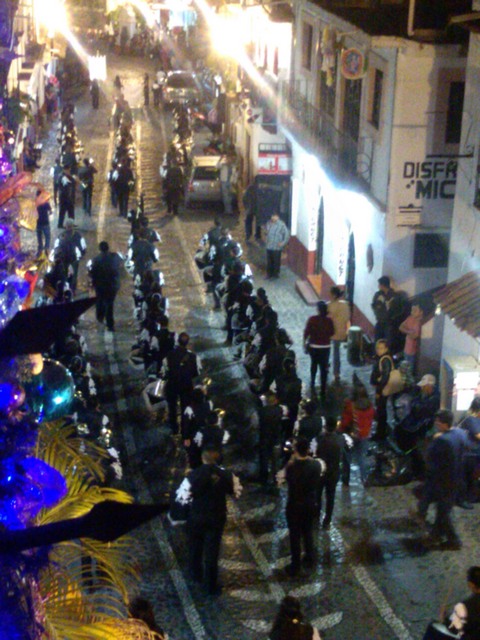
Today is December 11th, the night before the Festival of Guadalupe (the Mexican Virgin) and official kick-off of the holiday season in Mexico. So far, at least 4 drum and bugle corps have marched by. The streets are filled with processions carrying icons of the virgin followed by the reverent often carrying candles and smaller icons of their own (click here for pictures). The drums echo through the streets and off the mountains. Every so often, “air works” (fireworks without the fire, only the boom) add to the cacophony.

1211141956c-qprI think this is one of those nights when “there is no rest for the wicked.”

Chilpancingo and beyond

I came into the country with a nasty cough, the remnants of a nasty virus that seems to be going around. I spent most of my first week here just resting or snoozing, since a head/chest full of gunk and high altitude really do not go together very well. I started to feel human about the end of the week so I took the chance of traveling to Chilpancingo with my friends, Vanessa and Lili, to see other old friends at the Chilpancingo English congregation (ah finally I understand and am understood) and then further down the road for a party and overnight at Lili’s family’s home.

The food was fabulous, the entertainment (a drama about Moses and the 10 plagues of Egypt performed by the children) brought tears to my eyes.

This slideshow requires JavaScript.

After a few games, everyone danced and danced and ate and ate some more. A good time was had by all. When the night was over, everyone chipped in and cleaned up the compound, you never would have know that a party had been raging just moments before.

Did I say compound? Oh yes.

Lili’s family lives the way many do in these small towns. They own a chunk of property (perhaps a 1/4 acre or more) on which they build a house, plant some citrus, banana, and avocado trees and build a simple dwelling, used mostly for sleeping, since cooking, washing, and most other activities happen outdoors. As the family grows so does the house eventually including other houses for married sons.

Initially 3 rooms and a big porch running the length of the house (for a family of 5), Lili’s parents recently added new quarters for themselves with an indoor “kitchen” — a stove, counter for prep, and a table to eat at; water for washing dishes, etc is outside. It is like their own little efficiency apartment until the whole family shows up for a meal that is. The initial three rooms now provide a separate bedroom for Lili, when she comes home, and her sister, with a living room area between.

There is no running water in the house, as in many Mexican houses outside the cities. A washbasin (for dishes, clothing, and washing up) is located on the porch; the bathroom and shower are at the opposite end of the compound for sanitary purposes – keeping any smell or flies away from the living quarters (though both were so impeccably clean that I doubt any self respecting fly would come anywhere near. ) Though a little unusual by American standards, this is a delightfully simple way to live.

As tradition has it, they are building a new house for their son and his wife and eventual family (if there are many sons, each builds a house along the perimeter of the property). Again, this dwelling is used mostly for sleeping and some privacy. Outdoor cooking, laundry, bathing, and living space, including a big hammock under the trees, are communal. (Sorry I did not get any photos, my phone and only camera this trip died prematurely.)

This is an fine example of the importance of family in the Mexican culture. Father and son work together and everyone lives and helps each other, working in harmony. True family unity.

It was a real honor to be invited to the fiesta and to stay in Lili’s home, meet her family, and view old family photos. After this visit it is easy to see why Lili is such a delight to be around.

Hola mi amigos!


Greetings from Mexico!

It is early December and I am sitting on my balcony overlooking Taxco, Mexico. The sun is shining, the birds chirping, a light breeze stirs the 75 degree day — just about perfect I’d say, except you all cannot be with me.Typical Street - Taxco, Mexico

Since I have not posted to my blog in almost 6 months, I feel I owe you a brief explanation. My last posts were describing my trip home to Wisconsin from a rather mad-dash trip to Florida to escape the heating season in my apartment which was seriously affecting my chemical sensitivities . I got as far as Charleston, SC and was ready to head West into the mountains (Asheville and the Great Smokies) promising you more. (I’ve provided links my blogs on Charleston, Asheville, and the Smokies, to read posts on Florida, search in the box above.)

Sorry I let you down. Because of a need to speed home (rather than meander) the last couple of days I got behind. Then when I arrived home, the usual sensitivities reaction, “stopped me in my tracks.”

In the end, the decision was made that I had to find a different place to live, which with my sensitivities was not so easy. I spent the summer searching the possibilities, traveling hundreds of miles in the process, while at the same time making contacts, taking classes, and getting certification for a new occupational direction I hope to launch in the summer of 2015. To say I have been busy — coming and going, barely touching base at home before I was gone again — would be an understatement.

But that was then, and this is now.

By mid-November I finished selling, donating, or recycling most of my worldly goods, put a few things in storage, vacated my apartment, and traveled off to Portland, Maine to visit my daughter and family. Now, in Mexico, I finally have the pleasure of stopping long enough to catch my breath and tell about it.

First, though, I want to tell you “the rest of the story” of my trip through the mountains. Hang on to your sombrero, it will be a fast ride!

BlueBear-MexicanHat-qpr

Holy Week – Mexican Traditions (a flashback)

Palm Sunday is past and Easter is coming up, that means bunnies and egg hunts here in the US but in Taxco it is Holy Week, something that a young man who lives there calls “a show you just have to see — at least once.” This one week of the year, people descend upon Taxco who take their Lenten penitence very seriously.

Hundreds of penitents come to town bearing the virgin statue from their parish, accompanied by an entourage of family, friends, townspeople, and all the confirmation girls of the village in their white dresses. The penitent’s intent is to show their devotion by “walking in the footsteps” of Christ (never mind that he never set foot in Mexico.)

With masks over their faces (to disguise their identity) and what I can only describe as a black sarong (I am sure they have a different name for it) tied around their waists, each chooses one of three ways to show their devotion — walk bent over with chains around their ankles holding candles or a small cross in their hands (usually women), carry a giant cross (usually adolescent boys), or carry a tree trunk sized roll of thorn stems over their shoulders forming a sort of human cross.

On the evening of Maunday (or Holy)Thursday, there is a procession of the shrines, when the main street winding through town is filled with these masked guys in black,bowing to their particular virgin, and self flagellating themselves with a fabric whip. Each penitent along with their entourages wind all the way through the main street of town from the la Garita statue to the church at the Zocolo (the park square in the center of town.) Don’t even think of trying to get anywhere downtown on that night, or the rest of the weekend for that matter, as thousands upon thousands fill the streets (the hotels, and restaurants – some of which rent and open a second seating area just for this week) to gawk and “see the show.”

Statues of penitents, Ex-convent, Taxco, Mexico

Statues of Holy Week penitents, Ex-convent, Taxco, Mexico

Saturday morning is the solemn procession. I am not sure how far these people walk (a mile or 2) all bent over or carrying their burden, but they do it barefoot on hot cobblestones, and if you are carrying the thorns bleeding. Each penitent is watched to be sure they carry their own burden, though they have assistants to guide them along (since those with the thorns cannot see where they are going, and, if the procession stops to lift the thorn rolls off the guys shoulders, while the bent can straighten up.

Around the Zocolo people throng to watch the procession, creating an avenue between rows of live bodies snapping photos, making videos, and cheering as each penitent reaches the church and receives communion. It is pure chaos but fascinating.

This slideshow requires JavaScript.

As my friend, said, if you are in Taxco during Holy Week, you must “see the show.”

Fat Tuesday — Mexican Traditions

Today is  Fat Tuesday. They are partying in Rio  (Carnival), New Orleans (Mardi Gras) and other places around the world — celebrating a night of excessive eating, drinking, and revelry before Ash Wednesday and the Lenten period of fasting leading up to Easter.

I have never been to Rio or New Orleans on Fat Tuesday, but having been on Ludwig Strasse in Partenkirchen (Bavaria), Germany, where it’s called fausching and involves cow bells, yodeling, and an excess of sauerkraut and beer, the processions and celebrations in Taxco are a tame in comparison. But what they lack in revelry and drunken debauchery, they make up for in duration filling the streets today, tonight, and every Friday leading up to the Thursday before Easter, when the really big procession begins (more on that in another post though).

There are stilt walkers, costumed dancers representing indigenous traditions, and revelers of all ages — from school children who get off school early to dress in costume and parade the winding cobblestoned streets to adults forming informal street bands wandering through the city serenading the neighbors.

I am told that the processions — both solemn and fanciful, the parties at the churches, the fireworks, and the bands playing are all to remind people of the sacredness of the season, which is really ironic when a ragtag band comes over the hill playing “Roll Out the Barrel.”