
Time to leave Mexico City. Traveling – will catch you up in a few days.

Time to leave Mexico City. Traveling – will catch you up in a few days.
 Esther and Sebastion, took me to see “the pyramids” at Teotihuacan, north of Mexico City. Along the way I had a good view of the two snow covered volcanoes nearby. Popolcatepetl (Smoking Mountain) is active; his appropriately named companion, Iztaccihuatl (The Sleeping Woman), is not. It is an interesting legend, sort of the Mexican Romeo and Juliet, that you can read about here.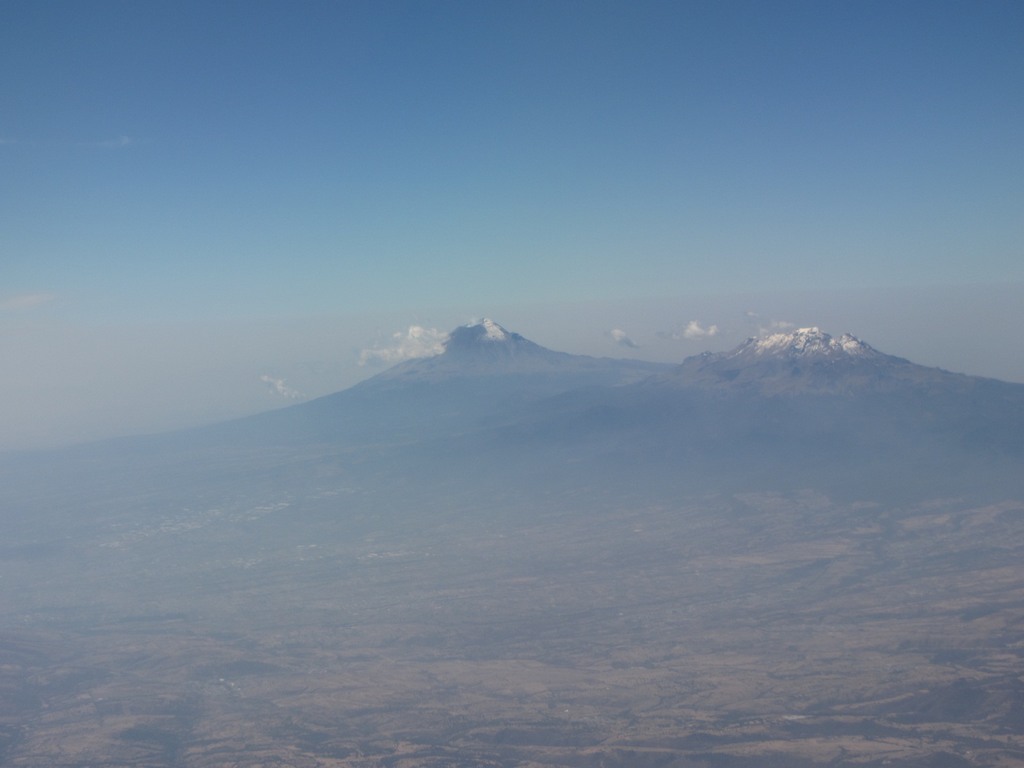
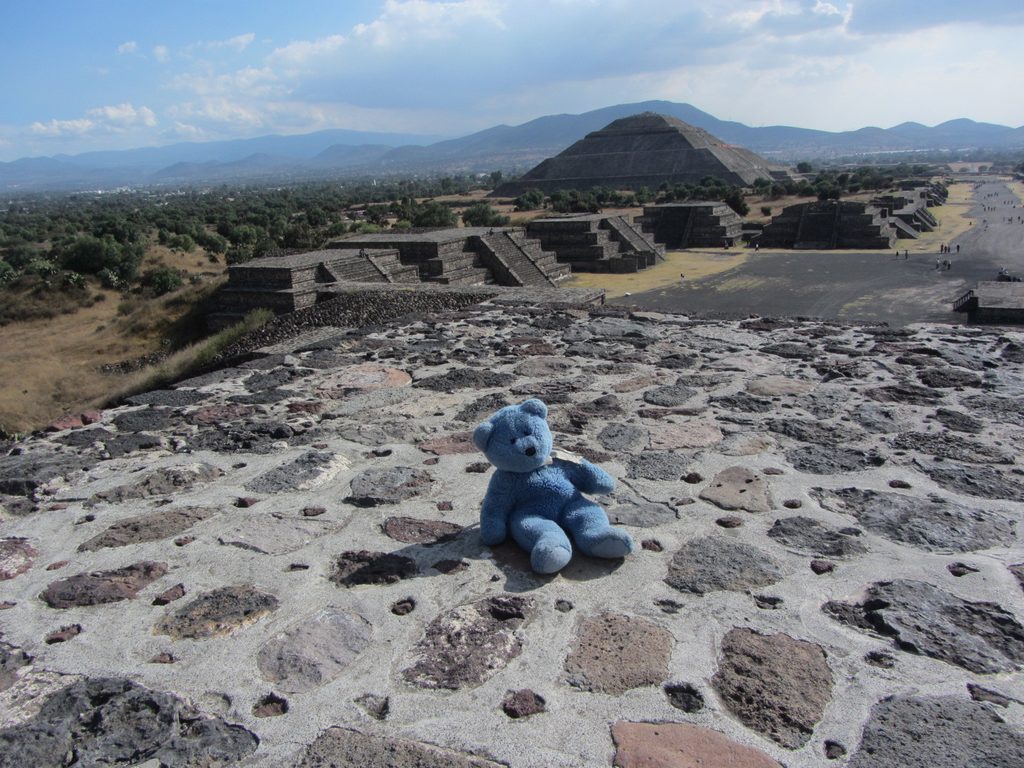
Teotihaucan is a huge archeological site, that the Mexican government has been excavating for 100 years, and they are nowhere near done yet. Dated to 10 BC or before, the city grew to 85,000 people and some 20+ square km at its zenith. Two giant, slant slope pyramids give evidence that the natives here worshiped the sun and the moon and since the main entrance to the city is called de la Avenida de los Muertos, practiced human sacrifice. Climbing to the top is steep; but what a commanding view of the valley and the mountains around. After the Teotihaucan people died off, perhaps due to the practice of the warriors wearing the skin of the people they killed in battle and thus being exposed to their diseases (especially the Europeans), the Aztecs and other native peoples respected the city as a Teotihuacan sacred site (and apparently the Spanish never went there), thus it remains for us to see and wonder about today.
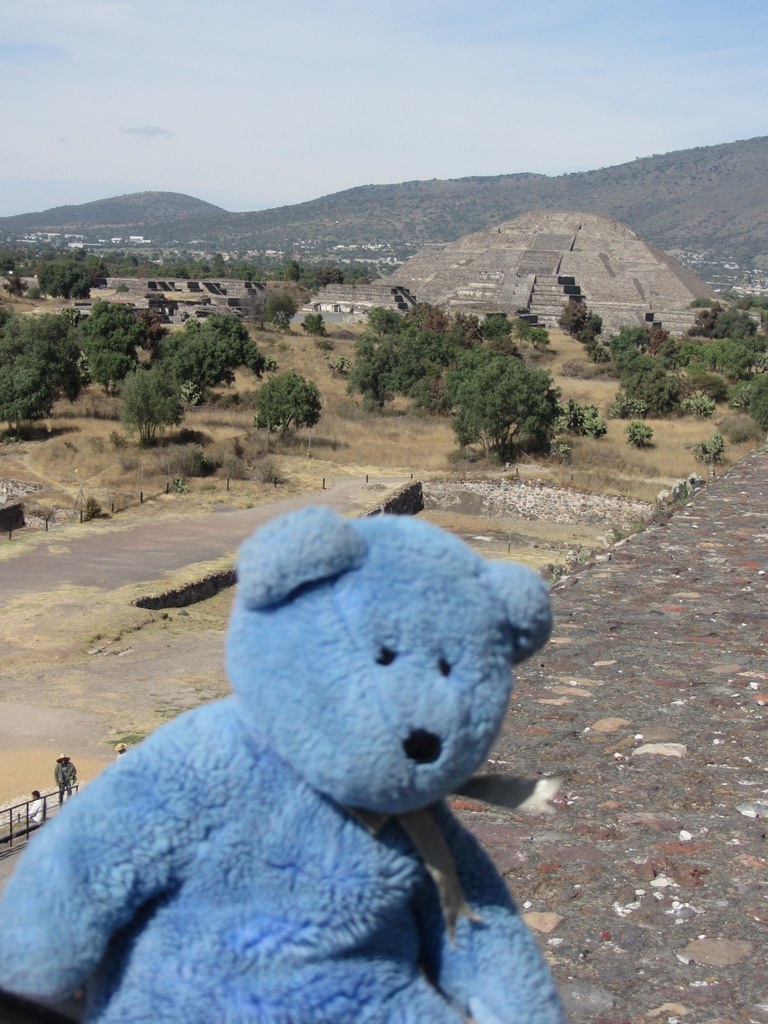

It never ceases to amaze me to see not only the building skills and the understanding of the movement of the sun, moon, and stars, that they could build such structures (without power tools, no less) and align them with perfect precision.
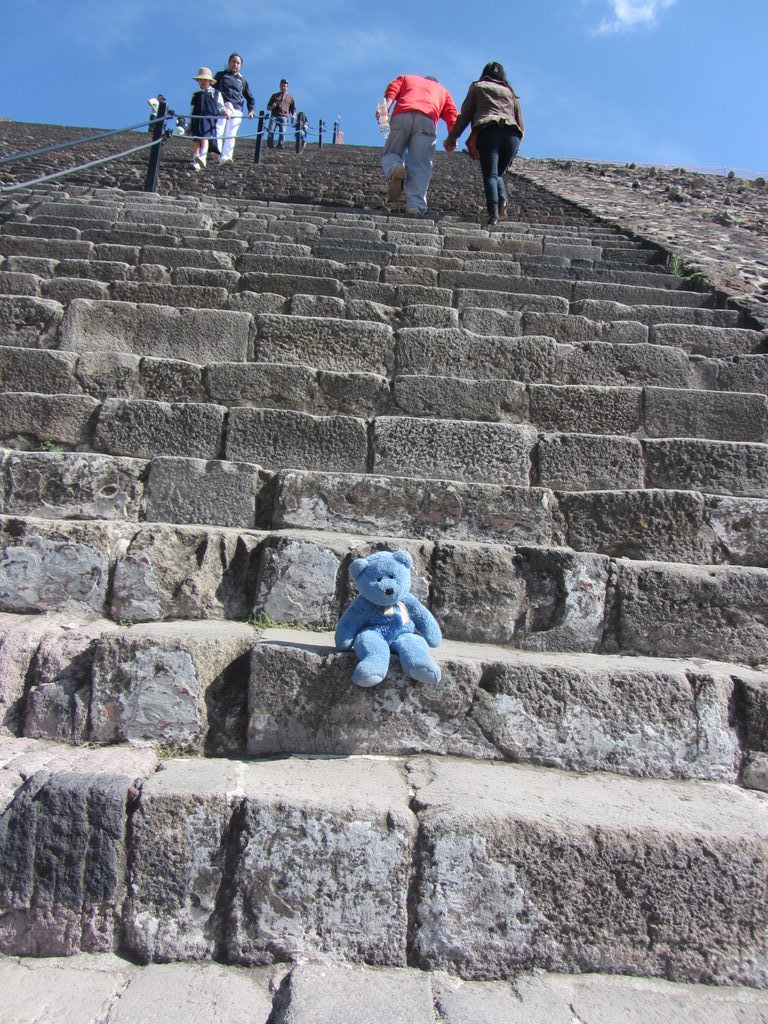 I wonder how the natives, who evidently were shorter than us, managed to run up and down the knee-high steps. The museum is filled with artifacts, murals, sculptures from the temples, and a scale model of the city.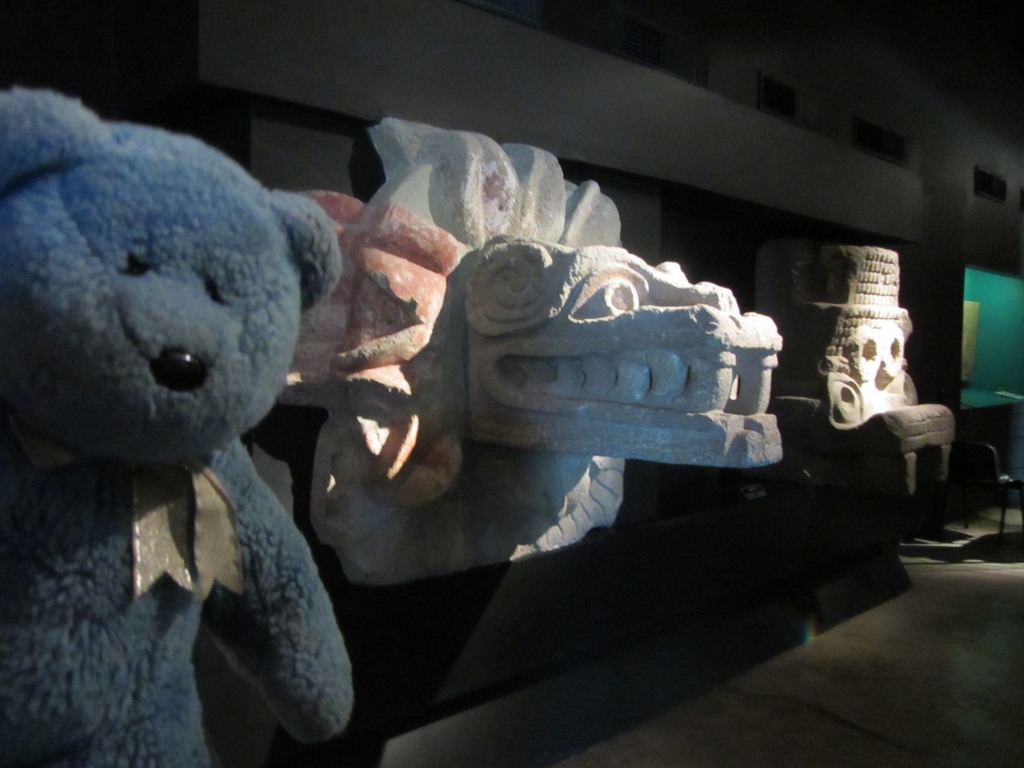
This is a trip well worth making; buses leave regularly from the north terminal. I hear the crowds can be huge so go on a weekday though; not very many people on a winter Tuesday in December. In fact I think the vendors may have outnumbered the visitors this day.
That’s one thing that detracts from the experience, not only here but anywhere in Mexico. Anyone can sell anything almost anywhere, without a permit or any regulation. Vendors try to sell you things, wash your windows, or dust off your car at intersections. People sell any matter of things in the park. Kids beg you to buy gum on the Zocolo (plaza at the town center). You get used to it, don’t make eye contact, and wag your finger a lot.
I really hate the commercialization of the archeological sites though; having someone approach you to try and sell you something every 5 minutes is annoying and interrupts both your conversation and your experience of the ancient site that you are in. I, of course, so obviously a gringo, would not only be approached, but when I shook my finger and said, “No,” emphatically, and kept walking, they would follow me and say, “Almost free.” Pretty funny, the first time.
I went with my friends to an Arabic class today. They are learning enough Arabic (and a little Russian too) to round out their language skills (which include very good English and some sign language.) It was interesting seeing and hearing, the very foreign to us, flowing letters and sounds. (reminded me of when Rachel was learning Persian – very pretty script.)
For now I think I will stick to Spanish; one language at a time. My hosts say I know many words. I am not conversational by a long shot but I can make myself understood and even amazed myself asking for things at dinner in espanol. I just might, as they say, know more that I think I do.
The temperatures are cool at night but by 10 am it is sleeveless shirt warm (especially for a gringo escaping a Midwest winter). With good public, transportation and much in the way of culture, I would enjoy living in some areas if it were not for the air pollution. As I feel about most large cities, “it is a nice place to visit but I would not want to live here.”
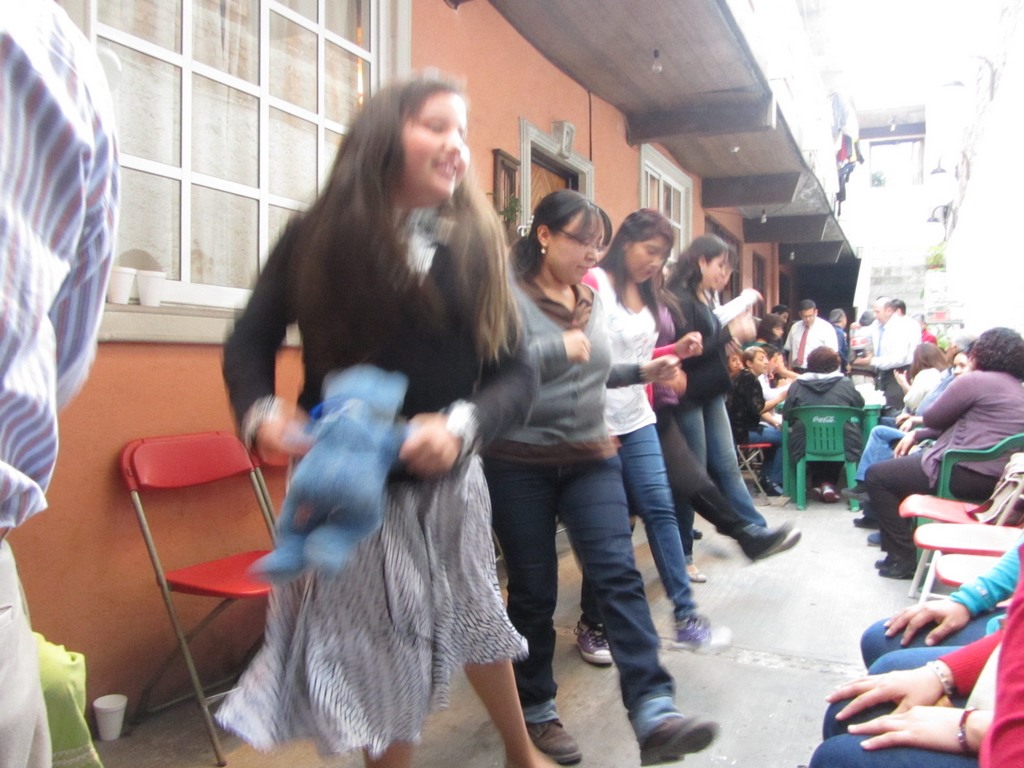 After the class, we were invited to a fiesta — a party to welcome my friends to a new congregation. There was pozole – a traditional Mexican soup made with maize (think corn nuts) boiled in broth which in this case some pork and a whole lot of pig skin and chunks of fat (not my favorite concoction.) You add oregano, chili, and onion to taste, and top with chunks of avocado. It is a dish for special occasions since it takes a long while to cook — a good thing too since it is so full of fat that a few bites has me full to the brim even with plenty of limes to cut the grease. Afterward we “danced it off;” a little merengue is a good thing and fun too especially with people who grew up dancing this way.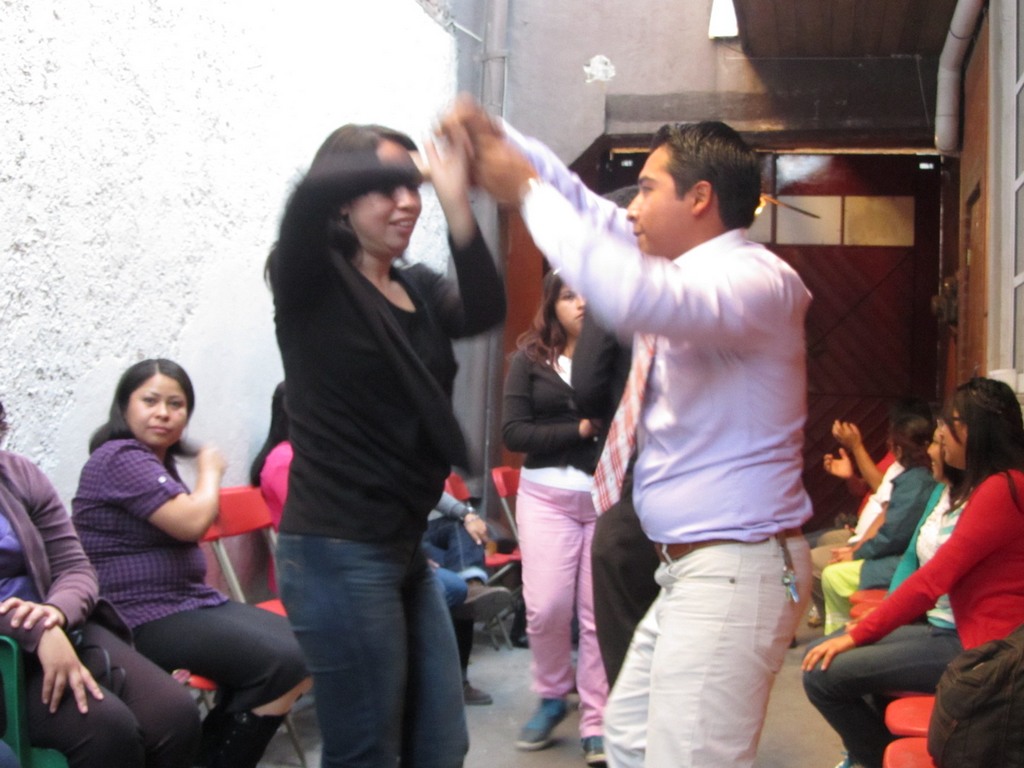
It is the end of the day and I am being serenaded by my host’s son, singing an aria in the shower. The sound, amplified by the shower stall, flows out into the courtyard and drifts to my ears below. A lovely way to end the day.
Mexico City is almost beyond comprehension to this humble Mid-westerner. The sheer enormity of a city boasting 28 million people is evident in the constant traffic — lanes and lanes and unofficial lanes wide, horns honking, and people scurrying everywhere. Metro (subway) cars packed like sardines; doors close on shoulders and fannies that didn’t quite squeeze in fast or far enough.
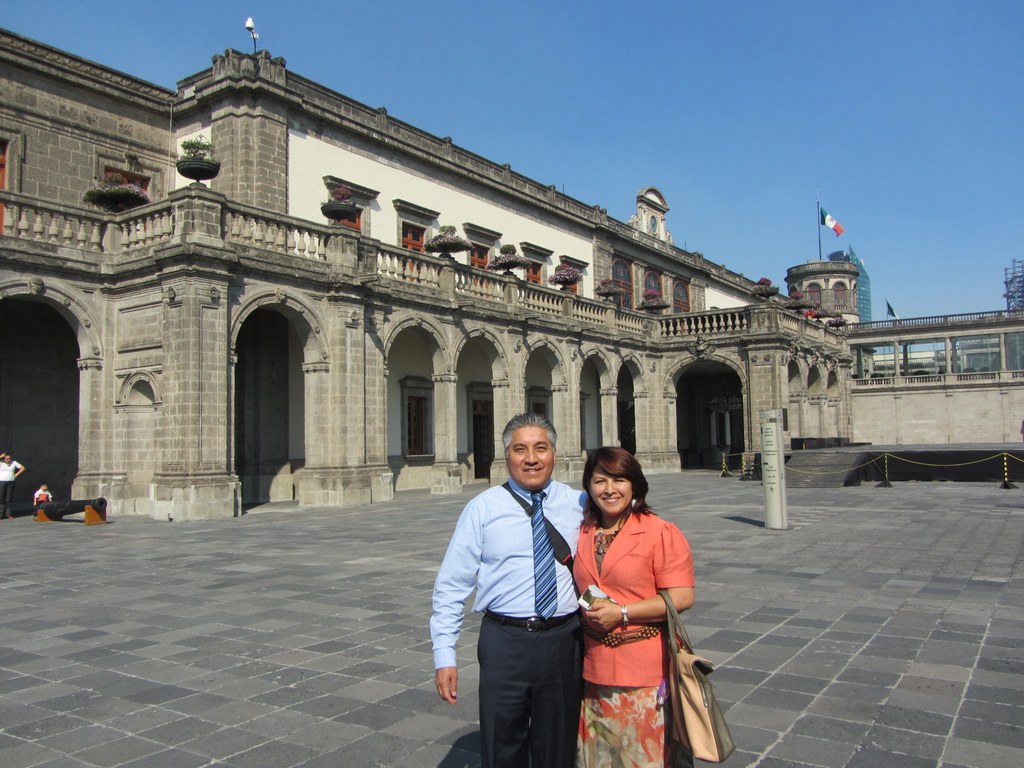 My hosts, Dr. Claudio and Caro Serrano, took me to the central city to “The Castle,” originally built, in the European style, for the Emperor Maximillian, one of the Hapsburgs, who had been governor of Milan, Vienna, and France (if I read it right) before this post (their family motto was something like “we rule the world.”)
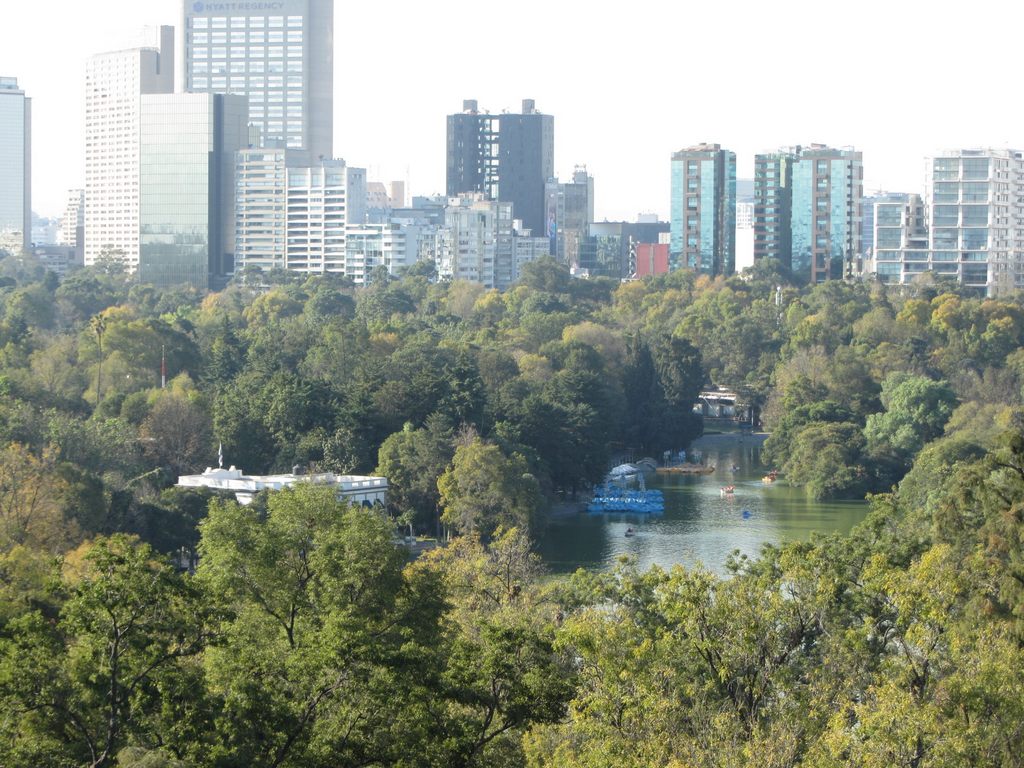
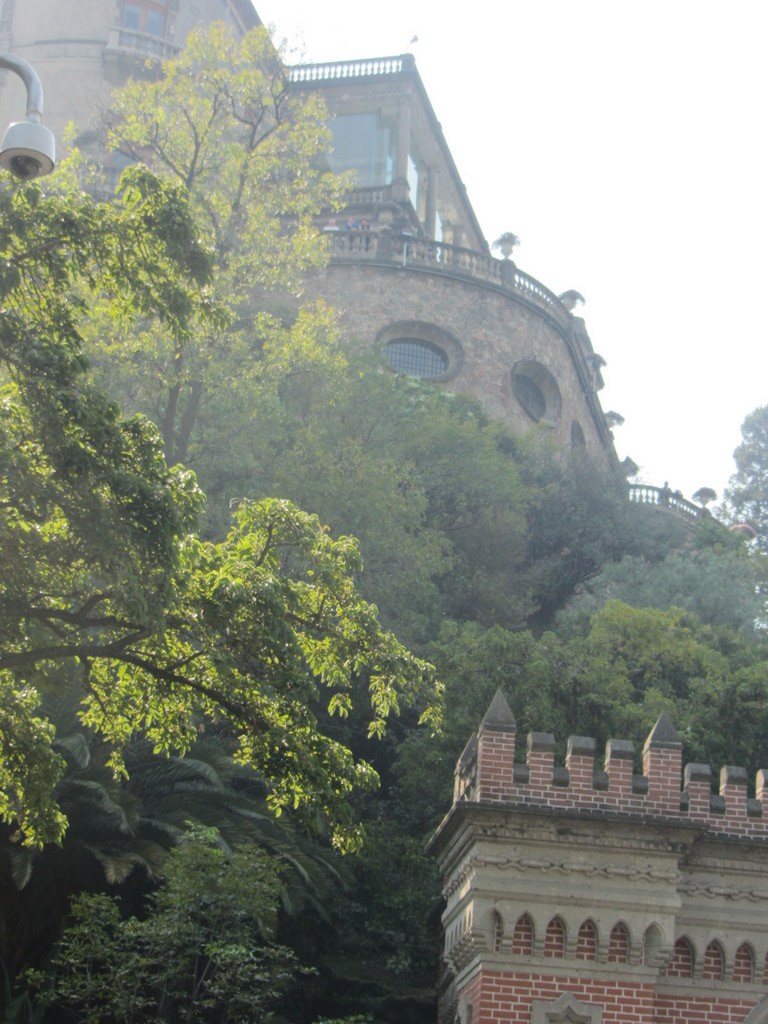 Rising above the city on a steep, rocky hill, thick stone walls accented by grand balconies and watchful turrets kept an eye on the emperor’s empire stretching out below. Much of the grounds now is a forest preserve with an artificial lake, zoo, and several other museums (think Chicago museum campus). They call the area “the lung” of the city for the oxygen the trees provide to try to offset the air pollution.
 The building is 1700’s European spectacular filled with mementos of the Emperor and Empress – gold buttons, watches, and jewelry, fine china, crystal, jewels, and opulent rooms decked out in the most fashionable European furnishings of the day — mostly Louis the XV and XVI France (Limoges floor length clock and candlestands stood out as exceptional) as was the ornate Italian made carriage.
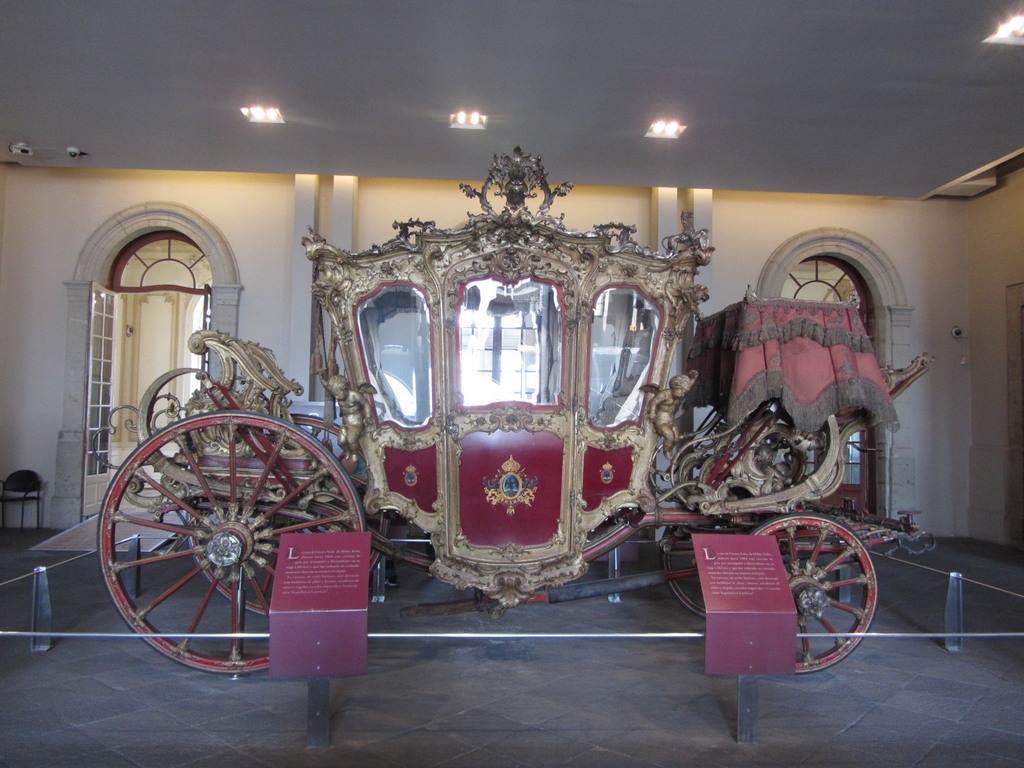 Can you imagine what it cost to ship this here?
After the Emperor went back to France, it was a millitary college that fought off a US invasion (of the fames Heroes de Ninos fame), a territorial governor lived here and ruled for 30 years until he was run out (and escaped to France) because of his love for all things French that drained the coffers, and finally the house of the Presidente who rattled around in it for awhile and then gifted it to the people of Mexico for an historical museum but still uses it for official functions for ambassadors and such.
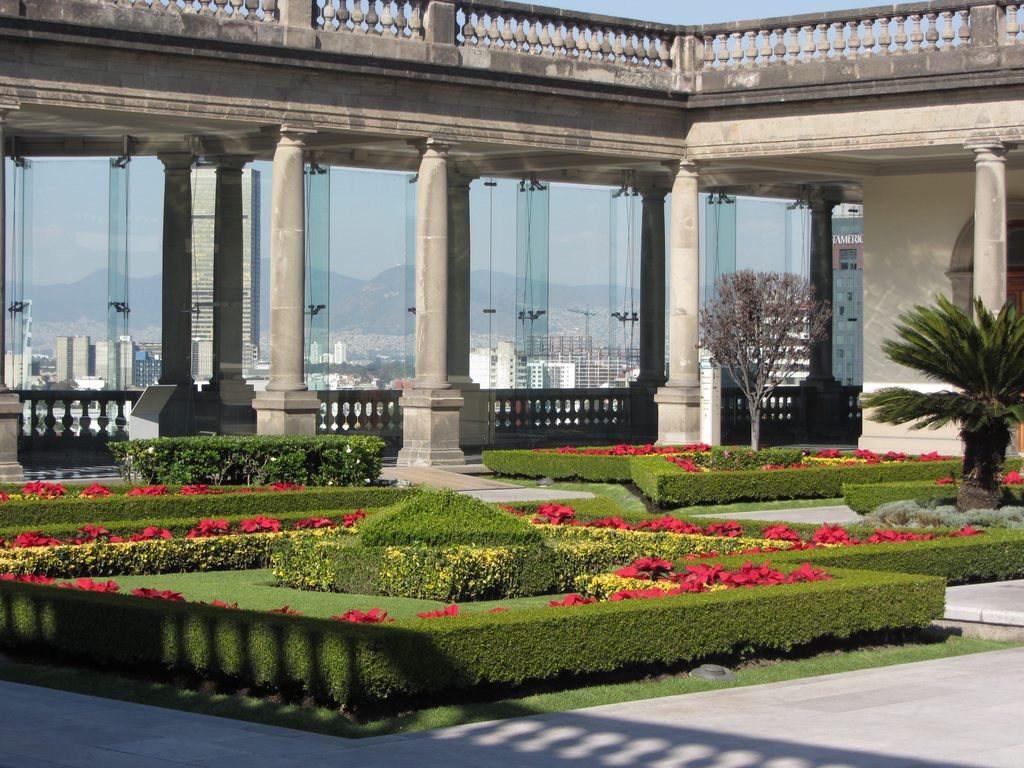 The rooftop garden, surrounding the old observatory tower is impressive, as is the long stained glass lined corridor and the view of the courtyard and from the courtyard overlooking the city.
Cruising over the heartland
Clouds like snow covered mountain peaks all around
Snatches of brown fields
Corn maze shaped like a rocket ship sporting “a star upon thars”
Headed South over middle states — Ohio, Tennessee, Louisiana
Blue skies reveal the great river’s serpentine windings
Suddenly nothing but blue dotted with white puffs
Below and above — stretching forever
Land appears — undulating no longer flat
Little villages and towns hug the sides and adorn the peaks
Rugged hills, softened by greenery
Roads zig and zag to the top and wind their way down again
Rivers meander between rocky promontories
Splitting in two
And coming together again
Whole once more
Mexico City
Red tile roofs stretch for miles upon miles
Isolated villages give way to housing tracts
Ordered grids broken by warehouses and plots of tilled land
The air grows hazy
Shrouding the view of houses, schools, a bull ring
The occasional park lined with trees
Briefly breaks the haze
The central city grows tall
Latin colors brighten the view
Brilliant red, blue, yellow, orange, violet, magenta
Wheels on the ground
 The Adventures of Blue Bear